Horizon 1.0: the Banxa checkout, rebuilt part by part

Wei Jie Lim is the product manager who led Horizon 1.0, the rebuild of the Banxa checkout.
Here, he shares what it is, why we built it, and what it took to get it live.
Banxa-Icon-RGB Favicon

By Wei Jie, Product Manager at Banxa

August 2026

The honest truth about rebuilding a checkout: most of the work is invisible. Put our old screens next to the new ones, and many look almost the same.
 
That’s the point. For the last six months, I’ve led Banxa Horizon 1.0, the full rebuild of the Banxa checkout. We didn’t repaint it. We rebuilt what every screen is made of.
 

What Horizon 1.0 is

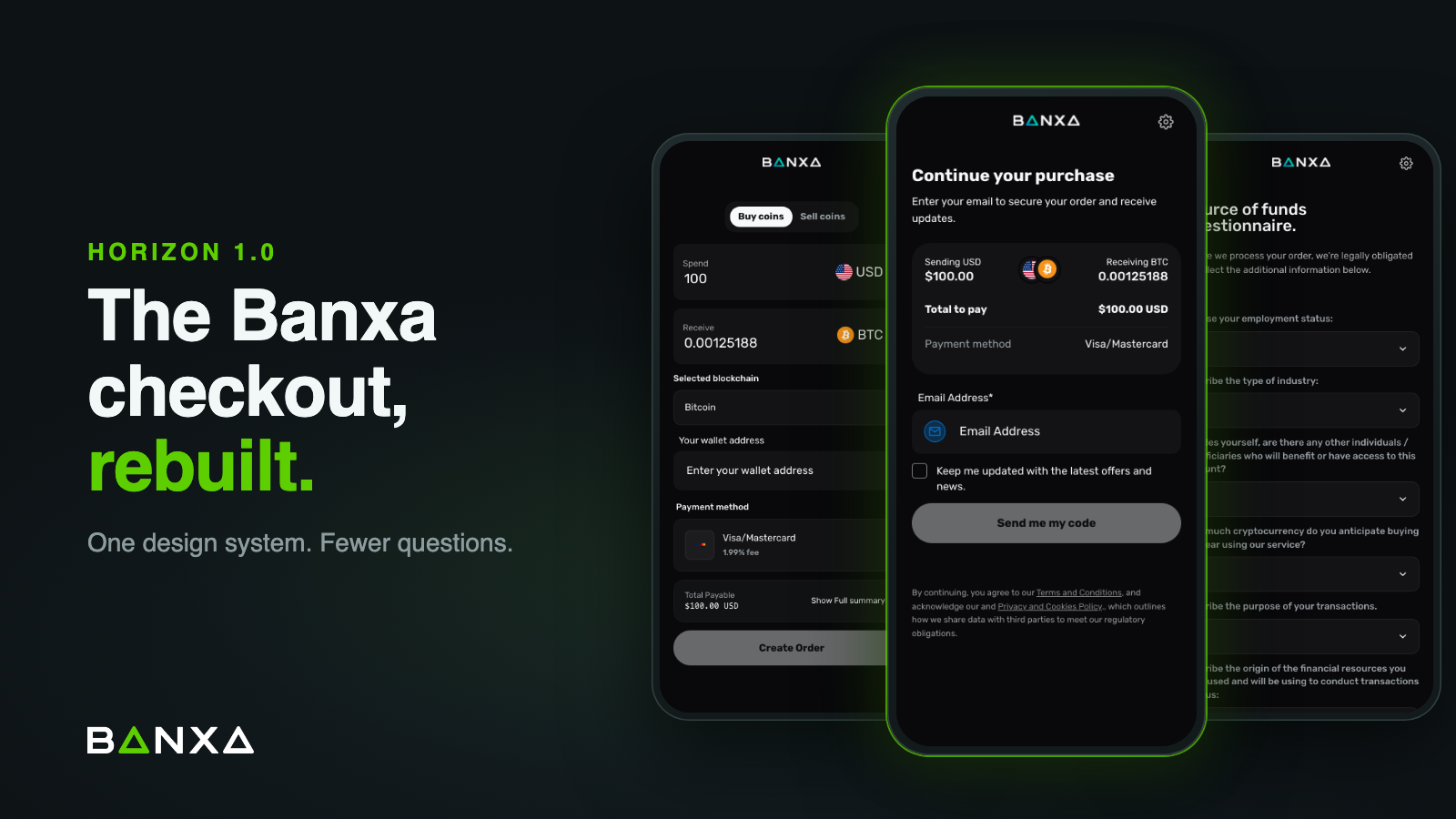
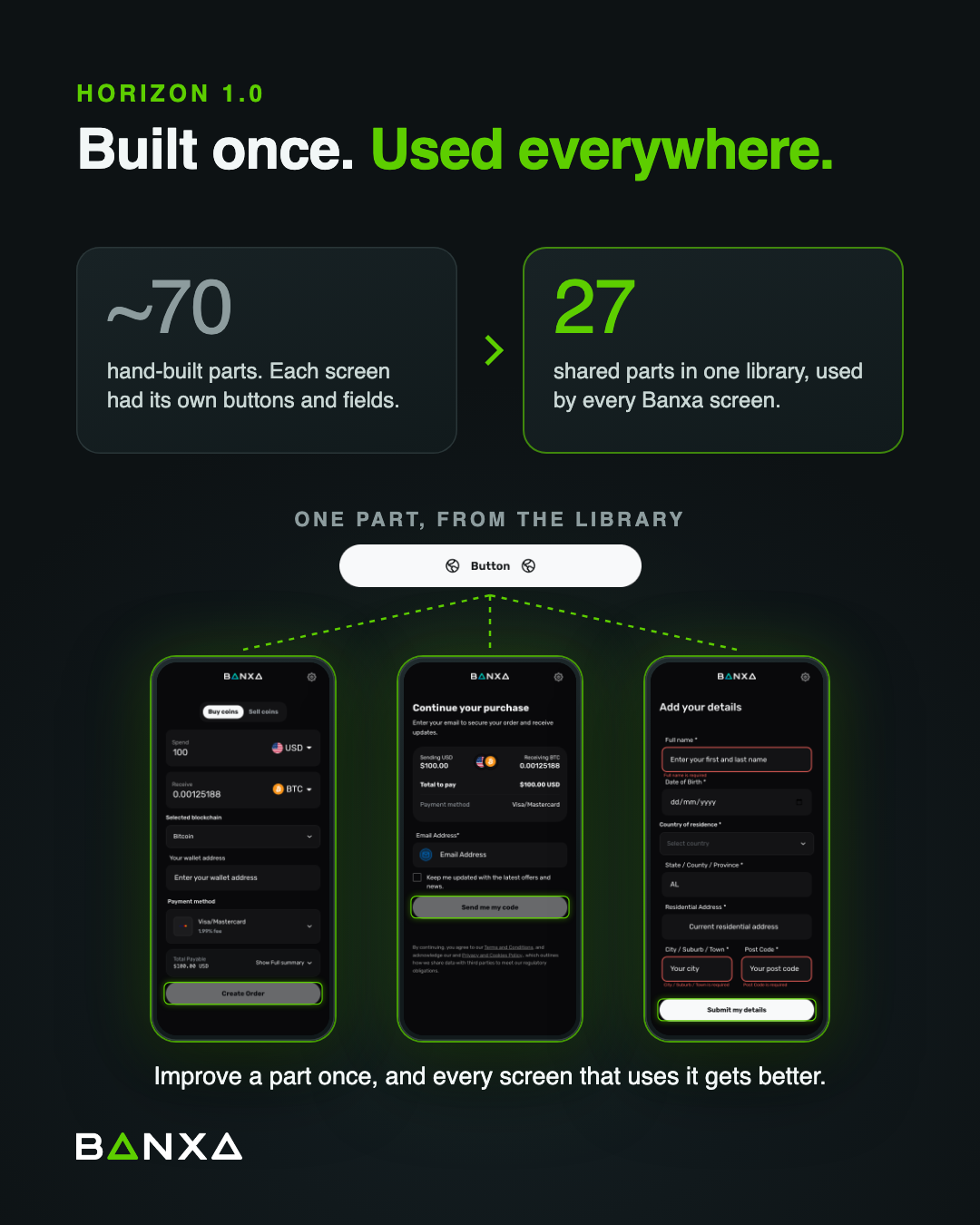
Horizon 1.0 is the Banxa checkout rebuilt on one design system. Every Banxa screen, from choosing what to buy to the order status page, is now built from the same 27 shared parts: buttons, fields, cards, tabs , code boxes and the rest.
That sounds like a design detail. For someone buying crypto, it means a checkout that asks fewer questions, keeps their order in view, and looks like one product from the first screen to the last.

Why we started

The old checkout was built one screen at a time, over several years. Each screen carried its own hand-made version of each button and field. By the time we counted, there were about 70 of those hand-built parts. The same button existed in dozens of slightly different versions, and fixing one didn’t fix the others.
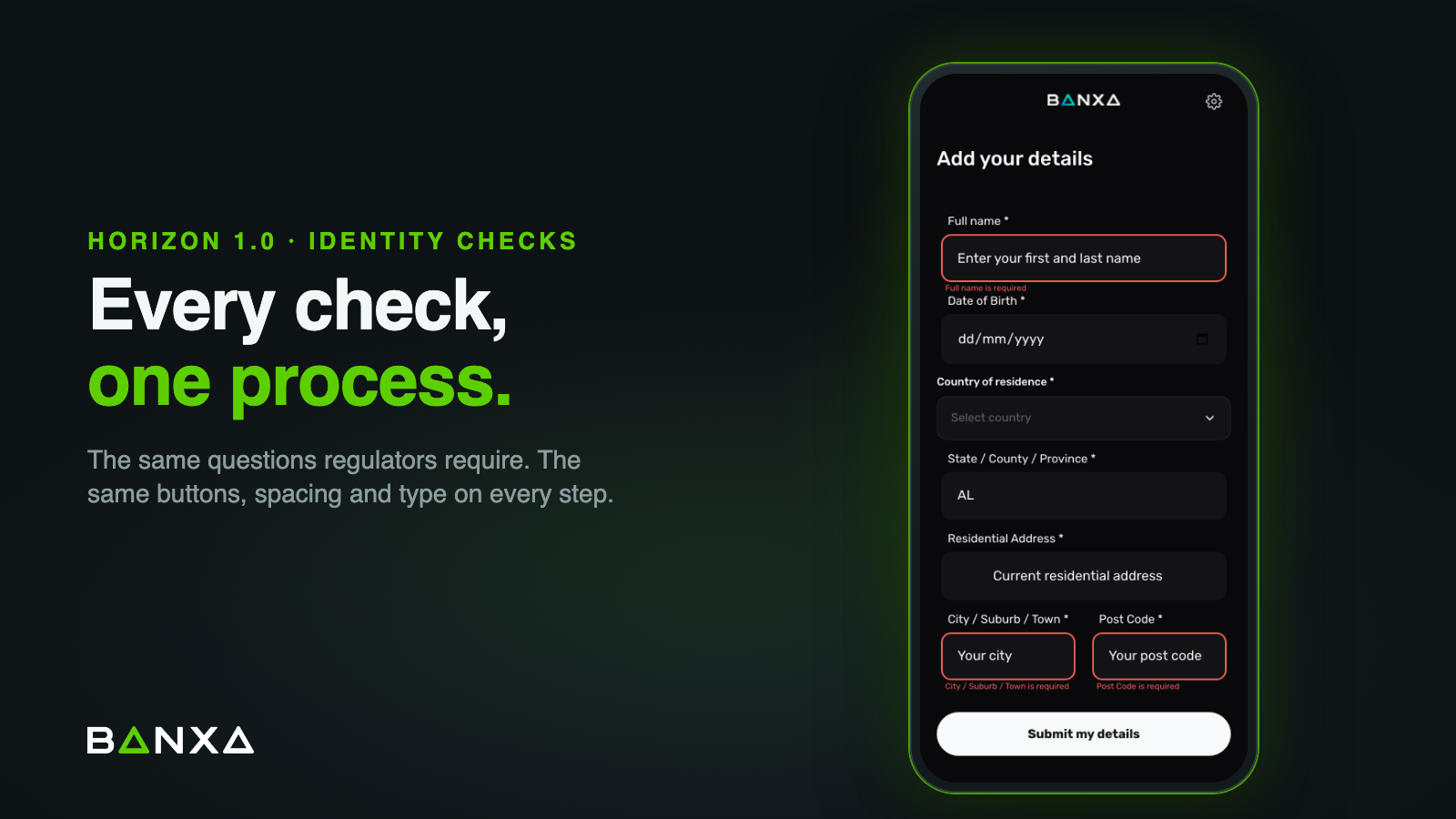
You could feel it as a buyer. Some people meet several identity checks in a row: a document, a selfie, proof of address. When every screen looks a little different, each step feels like starting again.
 
 
So we set out to do two things:
  1. Make the checkout easier to get through.
  2. Give ourselves a foundation that makes the next improvement faster, because the parts already exist.

The work behind it

There were three of us at the core: me, a product designer and an engineer. For six months we went through the checkout screen by screen. Our designer turned every button, field and card into one library in Figma. Our engineer built the same 27 parts in code and published them, so every team now builds from the same set.

My job was to hold one rule the whole way through. The steps, the checks and the questions stay exactly as they are. Only what people see changes.

We switched Horizon 1.0 on for Banxa Checkout first, on 23 September, before any partner saw it.

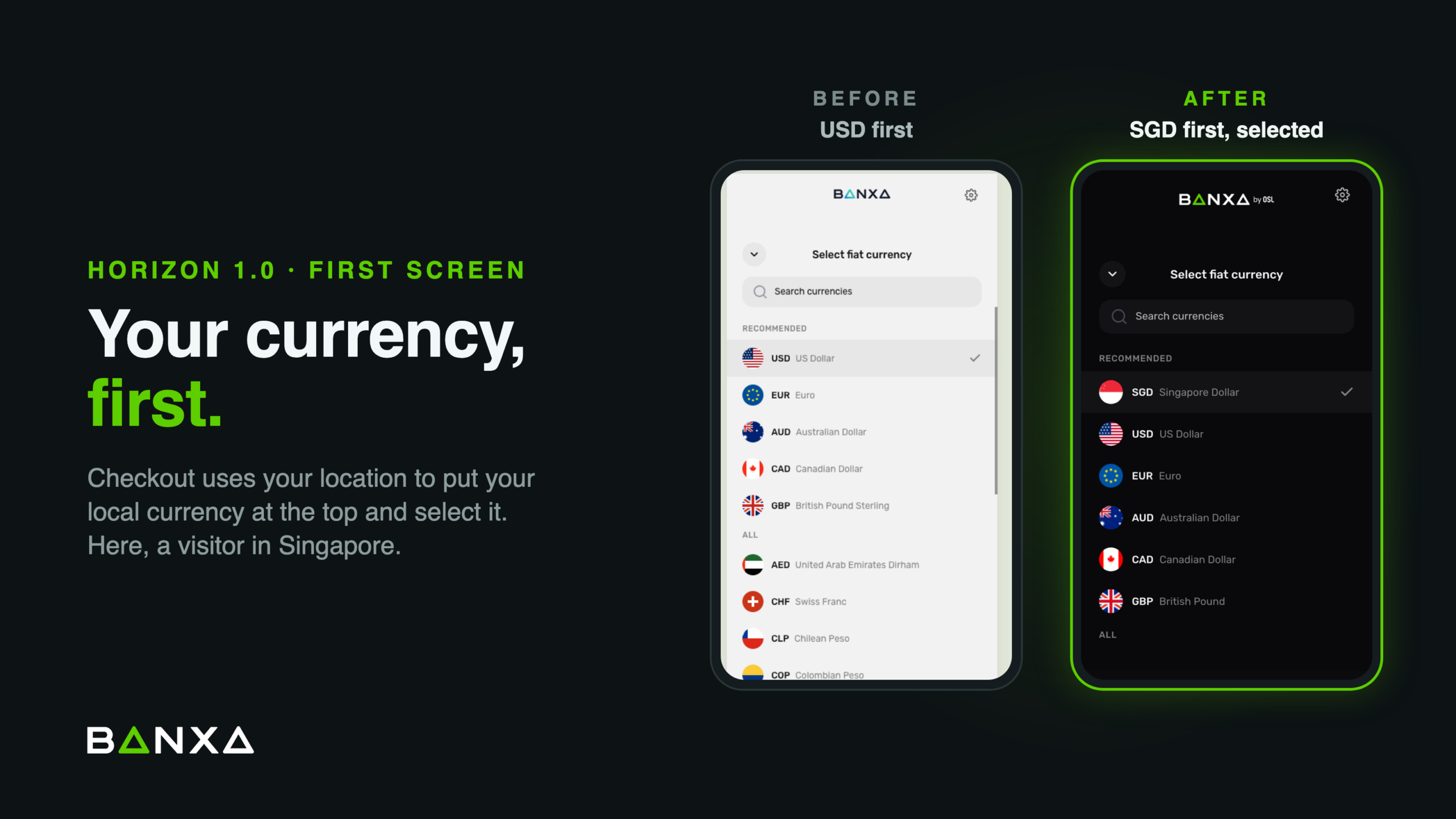
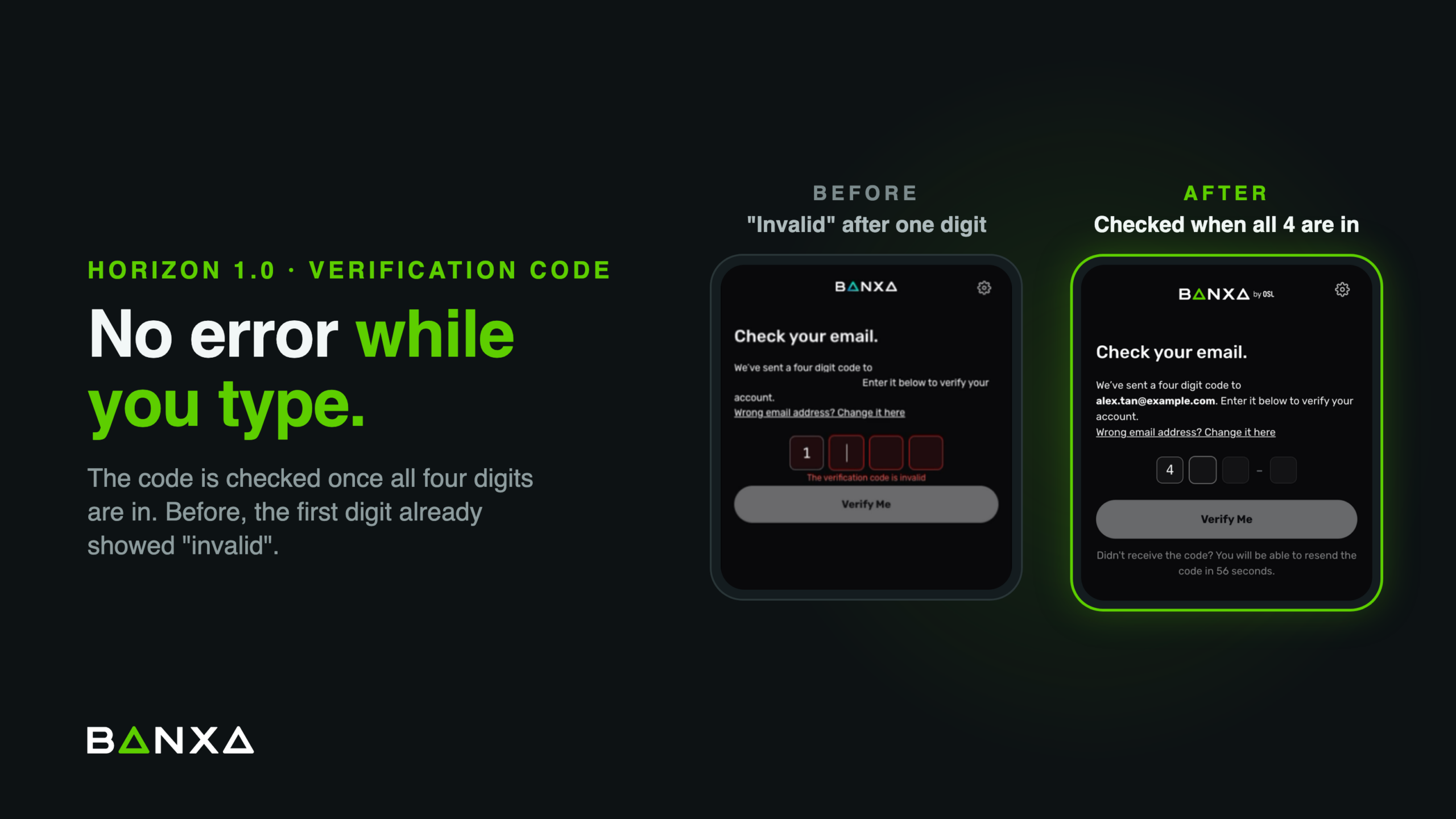
Going live was the start of the next stretch, not the end. The same day, I started a list. Its title is “Post H1 Launch UI-UX Issues & Undone Tickets”, which is about as unglamorous as it gets. It held everything that made the checkout harder than it needed to be. A customer in Singapore who didn’t see SGD among the recommended currencies. Payment icons that were hard to see in dark mode. A code screen that said “invalid” after the first digit.

We gave ourselves three weeks for the most urgent items, and one rule: partners would get Horizon 1.0 once those were live. Their customers meet our checkout inside their product, so anything rough on our screens is rough on their brand too.

Between 6 October and 2 November, we shipped 18 fixes from that list. Some were made once in a shared part, so every screen that uses it got the fix.

That’s the design system doing its job. Improve a part once, and every screen that uses it improves too.

On Friday 13 November, we switched Horizon 1.0 on for our first partners: Onramper, MELD and BitPay. We watched it closely for the next four to five hours, ready to switch it off for the weekend if anything big came up. It stayed on.

What it means if you’re buying crypto

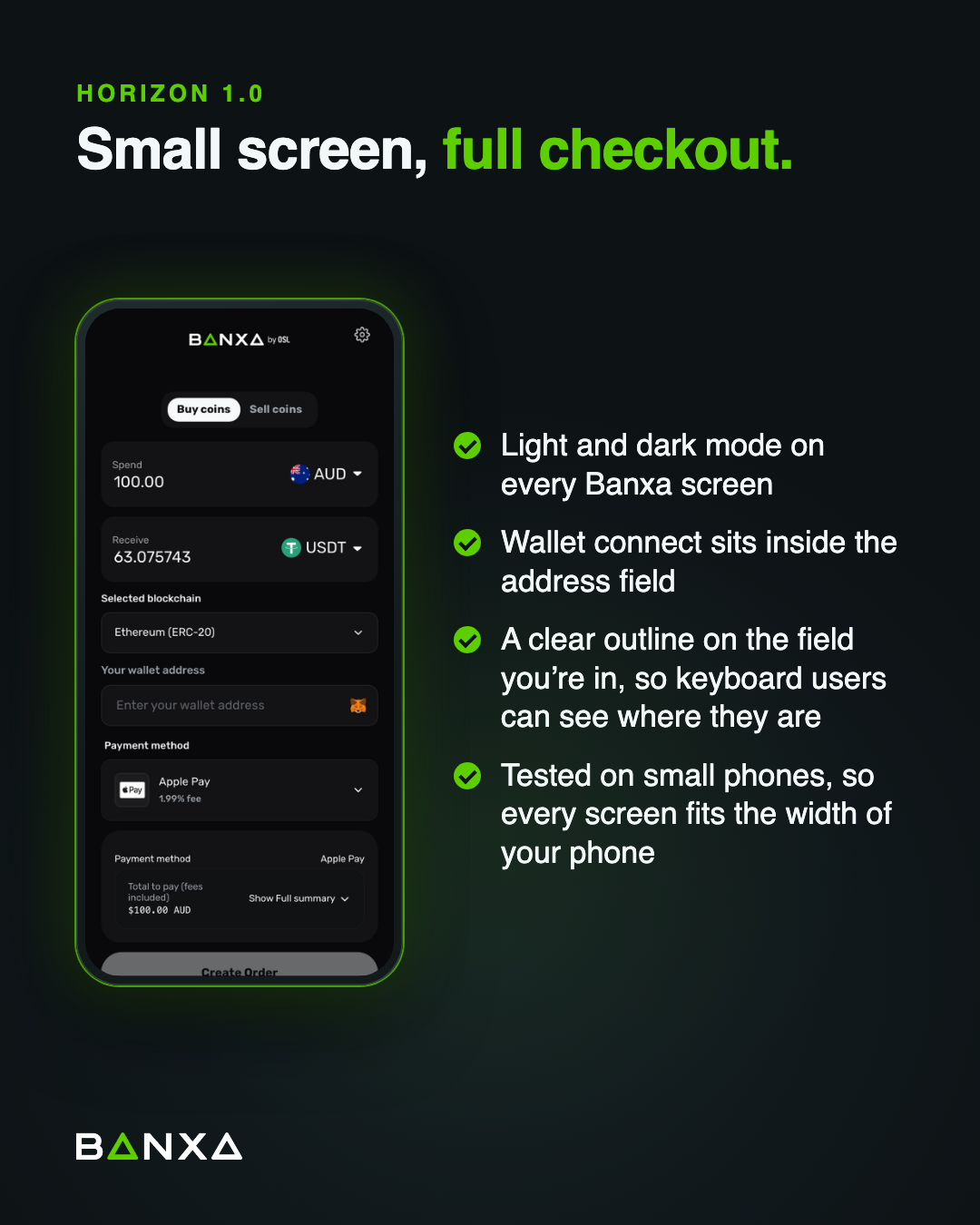
The first screen is already set up for you. Your local currency comes first and is selected, so someone in Singapore sees SGD. Pick a coin, and its default blockchain is filled in. Your payment method sits in one row with its fee. Later, we fill in your country and state from your location when we can tell, and you can change them.
 
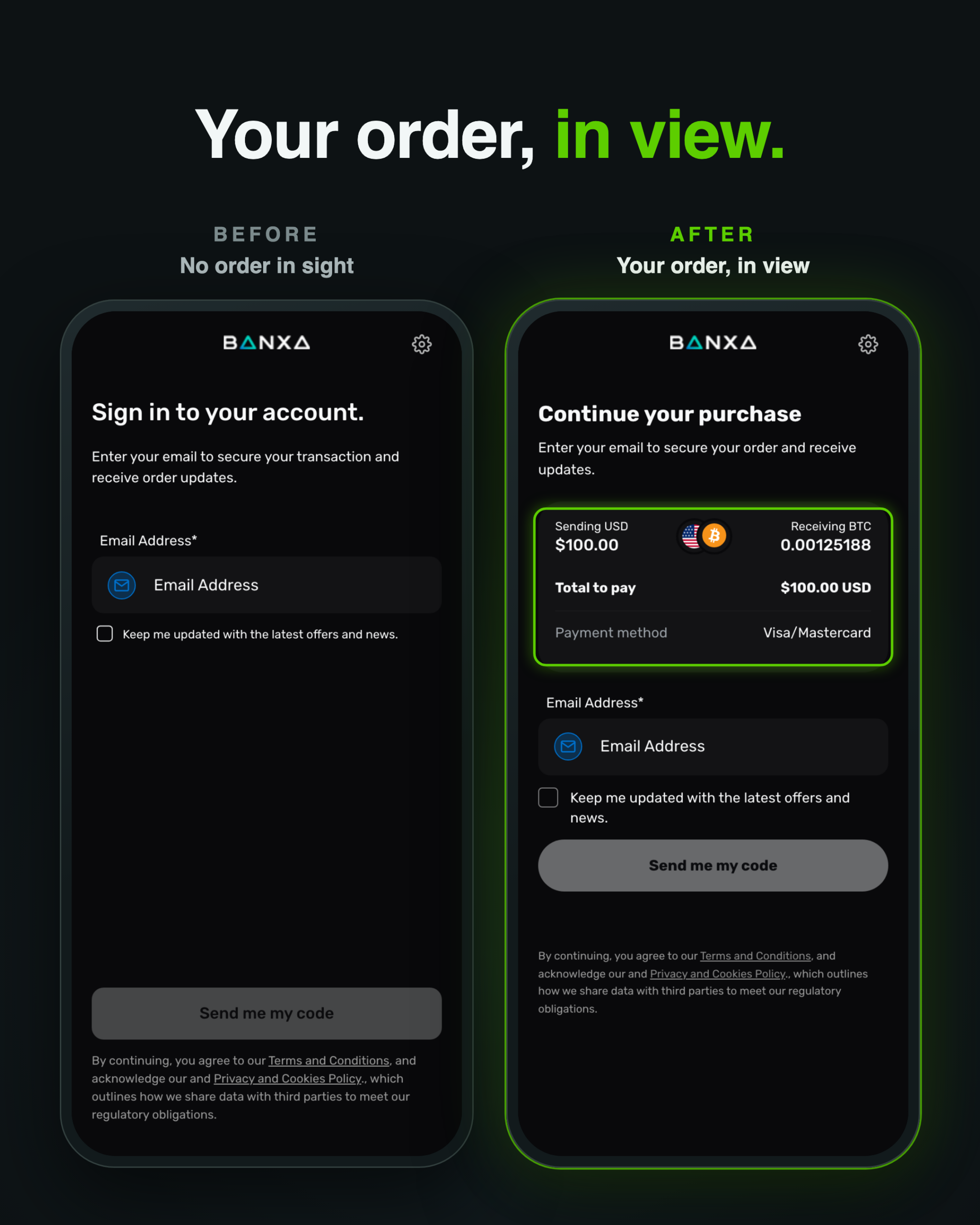
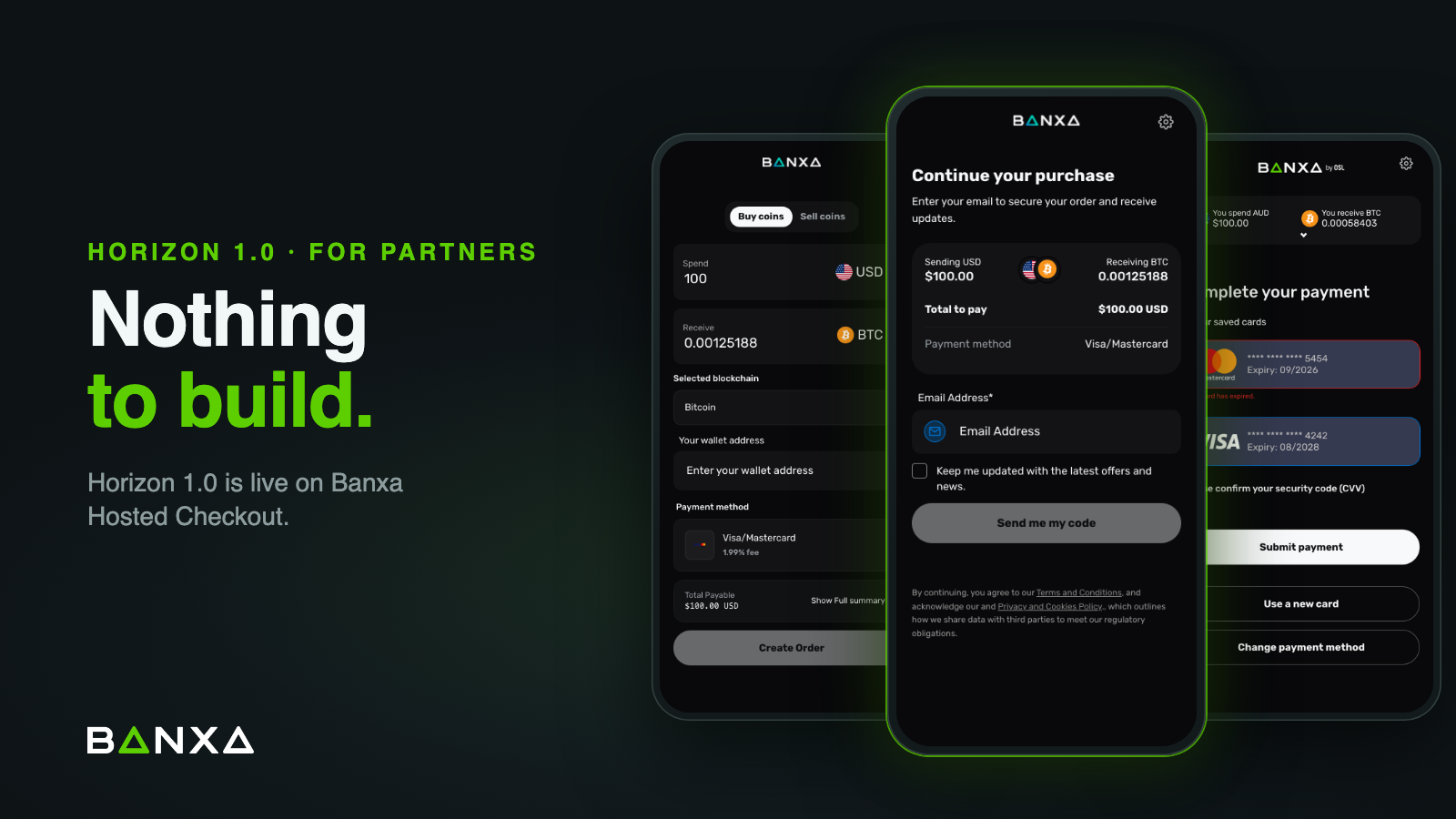
Your order stays with you. When you enter your email, what you’re paying, what you’ll get, the total and how you’re paying sit in a card right above the email field.
 
 
No error messages while you type your email or code. The email is checked once you’ve finished, and the code once all four digits are in. Tap the code your phone offers above the keyboard and you’re through. Email slow to arrive? Resend it after 60 seconds without starting again.
 
 
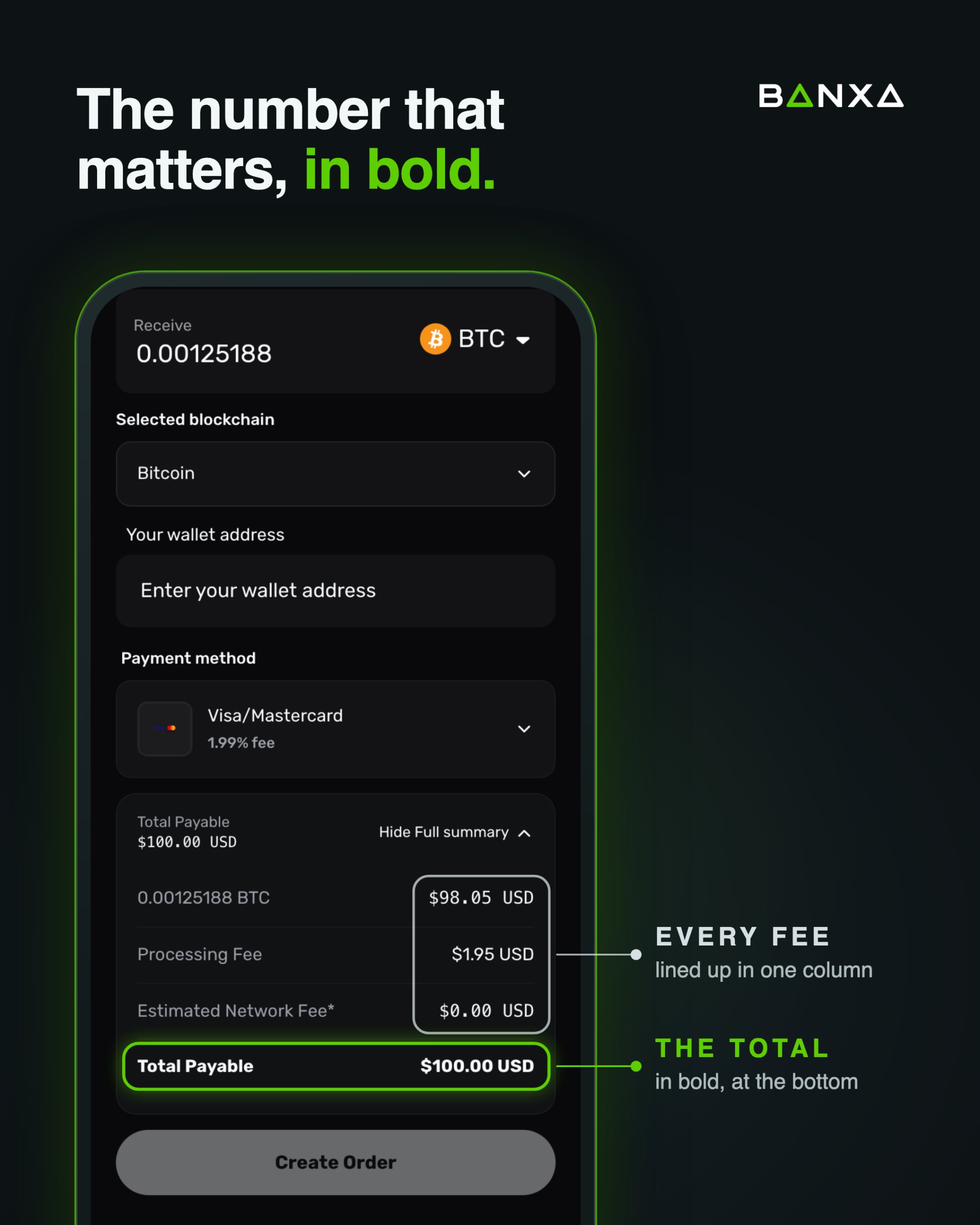
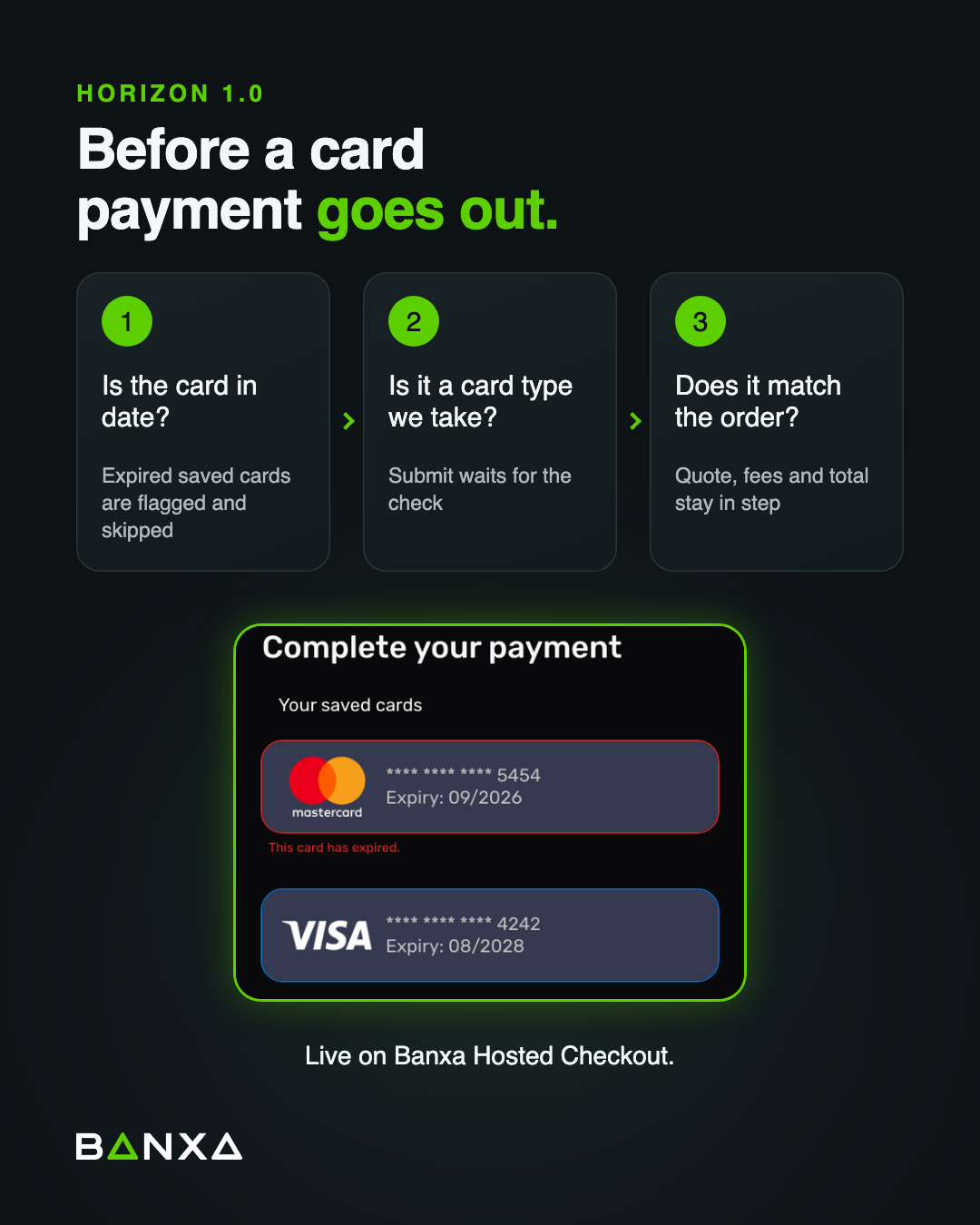
Paying has nothing hidden. The fees line up in one list, with the total in bold at the bottom. Saved cards past their expiry are flagged, and you land on one that works. If something does go wrong, the message shows in red, so you can’t miss it.
 
 
And it looks like one checkout, start to finish. Selling looks like buying. Every screen has a light and a dark version. The field you’re in has a clear outline. It’s tested on small phones, down to the narrowest common screen size, so every screen fits the width of your phone.


What it means for partners

If you use Banxa Hosted Checkout, there’s nothing to build. Your users get everything above inside your product. Expired cards, and cards we can’t take, are caught before the buyer pays, not after. Everyday messages show in neutral grey instead of your brand colour, so they aren’t mistaken for an error.


What it means for us

A reskin changes how each screen looks. Horizon 1.0 changed what every screen is made of.
That’s why it matters to the team as much as to anyone buying. When we fix something now, we fix it in one place. When we design something new, most of the parts already exist.
There’s one thing I’d add, because I learned it the hard way. Shared parts make a fix travel, and they make a mistake travel too. When a shared part has a problem, it shows up on every screen that uses it. A design system doesn’t make you careful. It makes being careful matter more.
 

What didn’t change

Horizon 1.0 changes how the checkout looks and feels. Orders, identity checks and settlement work as before, and we still ask the questions regulators require. Regulation sets those, and it should.

What’s next

Horizon 1.0 is the first phase. We’re already working on Horizon 2.0. More on that soon.
The list I started on 23 September is still a work in progress. We’ll keep finding, fixing and shipping the next version. This is how we keep moving, with our eyes fixed on the Horizon.
 
Have a question? Talk to us: https://banxa.com/talk-to-our-team/

Before you go

Pricing may vary. Our partner pricing is flexible and customized based on your integration requirements and volume

Before you go

Pricing may vary. Our partner pricing is flexible and customized based on your integration requirements and volume