Who Is Satoshi Nakamoto?
Bitcoin's creator emailed a nine-page paper on 31 October 2008, shipped the first code and went quiet in April 2011. What the record proves about Satoshi, and what it never has.

TL;DR
- Satoshi Nakamoto is the pseudonym on Bitcoin's 2008 whitepaper and first software, and no claimed identity behind it has ever been proved.
- The written record runs from a 31 October 2008 mailing-list email to an April 2011 note saying "I've moved on to other things".
- Researcher Sergio Demian Lerner estimated in 2019 that one early miner, presumed to be Satoshi, mined close to 1.1 million BTC.
- A UK High Court judge ruled on 14 March 2024 that Craig Wright is not Satoshi, while Dorian Nakamoto and Peter Todd have both denied being him.
On 23 April 2011 the developer Mike Hearn got a reply from the person he had been emailing about Bitcoin's code. "I've moved on to other things," it said, adding that the project was "in good hands with Gavin and everyone", meaning Gavin Andresen and the other developers.
Within days the sender had gone silent, and nothing confirmed has come from the name since. The name on the email, Satoshi Nakamoto, also sits on a nine-page paper, the first Bitcoin software and a long run of forum posts. Then it stops, with an estimated fortune in early coins largely left where it was mined. More than fifteen years on, nobody has proved who wrote any of it.
This guide keeps the checkable record apart from the claims, which mostly are not checkable at all. Educational reading, not financial advice.
What the record actually shows
Everything solid about Satoshi comes from a short paper trail, and nearly all of it carries a timestamp.
31 October 2008. An email titled "Bitcoin P2P e-cash paper" reaches the Cryptography Mailing List at 18:10 UTC, describing a cash system that is "fully peer-to-peer, with no trusted third party".
3 January 2009. The first block is mined with a line of text embedded in it: "The Times 03/Jan/2009 Chancellor on brink of second bailout for banks". Its 50 BTC reward can never be spent, because of the way that block is written into the code.
8 January 2009. Version 0.1 is announced on the same list as a Windows download, with the C++ source code published alongside.
12 December 2010. Satoshi's final post on the Bitcointalk forum, a dry note about denial-of-service limits in version 0.3.19.
23 April 2011. The email to Hearn, often cited as the last.
The paper's eight references open with Wei Dai's b-money proposal from 1998 and include Adam Back's Hashcash paper from 2002, so the author was plainly building on decades of earlier work by other cryptographers.
The newspaper headline proves timing, not identity: it shows the first block could not have been made before that day's paper came out.
What the record lacks is just as telling. There is no photograph, no recording of a voice and no confirmed location, so every theory about the person behind the name is built from writing style, coding habits and circumstance.
How many coins Satoshi may hold
In 2013 the security researcher Sergio Demian Lerner spotted a fingerprint in Bitcoin's earliest blocks, a quirk in the data suggesting that a single machine had mined a large share of them. His April 2019 follow-up put that miner, nicknamed Patoshi, at about 22,000 blocks and close to 1.1 million bitcoin, and that miner is widely presumed to be Satoshi.
Lerner himself is careful, calling the evidence circumstantial, with no mathematical proof and no direct witness. A Bitquery reanalysis reported in September 2026 found that the total depends on how strictly the pattern is applied, ranging from just under 0.9 million BTC on the tightest reading to about 1.17 million on the loosest.
Either way, the figure is an estimate built on inference.
Those coins matter for a different reason, though, because they are the one piece of evidence that could settle the question in public. Every bitcoin transaction is recorded on a ledger anyone can read, so if the bulk of those coins ever moved, the whole network would see it within minutes.
People who have been named
On 6 March 2014 Newsweek ran a cover story naming Dorian Nakamoto, a man living in Temple City, California. On 17 March he answered through his lawyer with a written statement saying he did not create, invent or otherwise work on Bitcoin, and that he unconditionally denied the magazine's report.
Ten years later the documentary route was tried. HBO's Money Electric: The Bitcoin Mystery, directed by Cullen Hoback and aired in October 2024, pointed at the developer Peter Todd. "I am not Satoshi," Todd told Bloomberg, calling the film a "threadbare, circumstantial, coincidence based approach" to finding Satoshi.
Both men said no, and neither was ever shown to be wrong.
The one claim a court tested
Craig Wright, an Australian computer scientist, spent years saying he was Satoshi and brought lawsuits against Bitcoin developers on the strength of it. The Crypto Open Patent Alliance, a non-profit, took him to the High Court in London to get a ruling on the question itself.
After a trial lasting more than five weeks, Mr Justice Mellor ruled from the bench on 14 March 2024. Wright, he found, did not write the whitepaper, was not the person using the Satoshi name between 2008 and 2011, did not create the Bitcoin system and did not write its first software.
The written judgment followed on 20 May 2024, and in it Mellor found that Wright had forged documents "on a grand scale" to prop up the claim. In July 2024, under a court order, Wright had to post a notice on his own website stating that he is not Bitcoin's inventor.
Lord Justice Arnold of the Court of Appeal refused Wright permission to appeal in November 2024. In December 2024 Mellor found him in contempt for issuing a new claim, based on his supposed authorship, in breach of a July 2024 order, and gave him 12 months in prison suspended for two years.
It is the closest thing in this story to an official finding, and it settles only a negative: who Satoshi is not.
Why the answer still matters to bitcoin holders
Bitcoin does not need its founder. Other developers have maintained the software ever since Satoshi stepped away, and nothing in the current software gives the founder's keys any special power over the network or its rules.
The open question is the coins. A movement from the early addresses would be seen on-chain at once, and anyone claiming the name could end the argument by signing a message with a key from one of the first blocks, a test that anyone can verify with free software. Until one of those things happens, the record stands where it did in April 2011.
Frequently Asked Questions
About the author — Dan Clarke
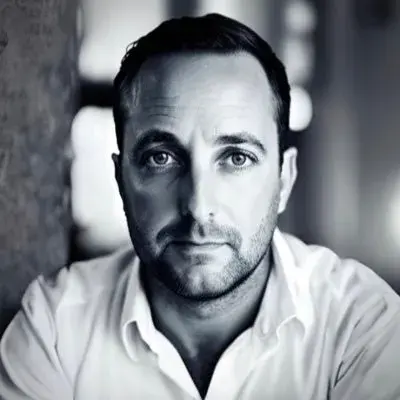
Dan Clarke is the author of Bitcoin: The Complete Guide and a former content lead at Binance Academy, where he wrote crypto education for readers arriving with no background in the subject. He has worked in the cryptocurrency industry since 2017. His rule for these guides: plain language first, precision where it matters, no cheerleading.